Human Development Facts

The first thing to establish is the biological facts of human development. As a result of intercourse, or in vitro fertilisation (https://en.wikipedia.org/wiki/In_vitro_fertilisation), a sperm enters an egg and human development begins. This initial sperm/egg combination is called a zygote (https://en.wikipedia.org/wiki/Zygote). At this point the “human” is a single cell which then goes into a process of cell division, called cleavage. Identical twins (or other multiples) could result from this one cell.
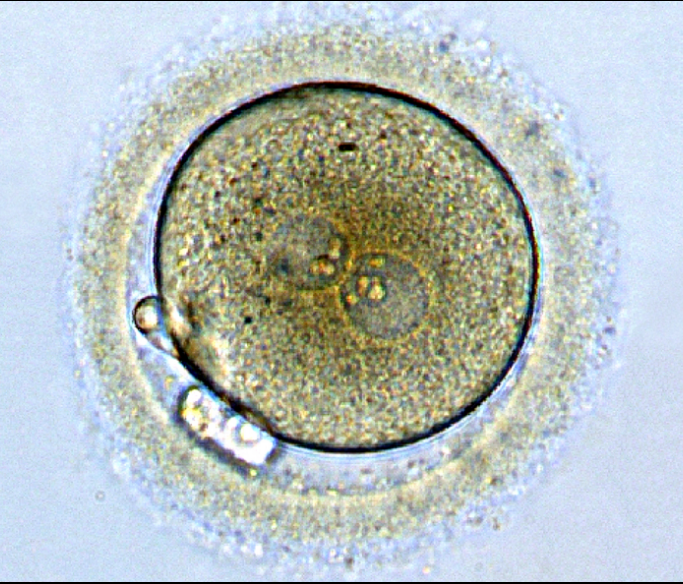
Note that there is a time lag of up to two weeks between intercourse and fertilisation. It is for this reason that the Morning After Pill is considered non-abortive because it causes the body to flush out the as yet unfertilised egg.
Next stage is a blastocyst (https://en.wikipedia.org/wiki/Blastocyst). This happens about 5 days after fertilisation. At this stage the blastocyst becomes implanted in the uterus (if not an ectopic pregnancy occurs which is fatal if the embryo is not removed quickly, and no, there are not reimplantation procedures in known medical science – see https://blogs.bmj.com/bmj/2019/12/17/the-myth-of-ectopic-pregnancy-transplantation/). The diagram below shows that the blastocyst (the green and purple blob) is just a bunch of cells. Literally.
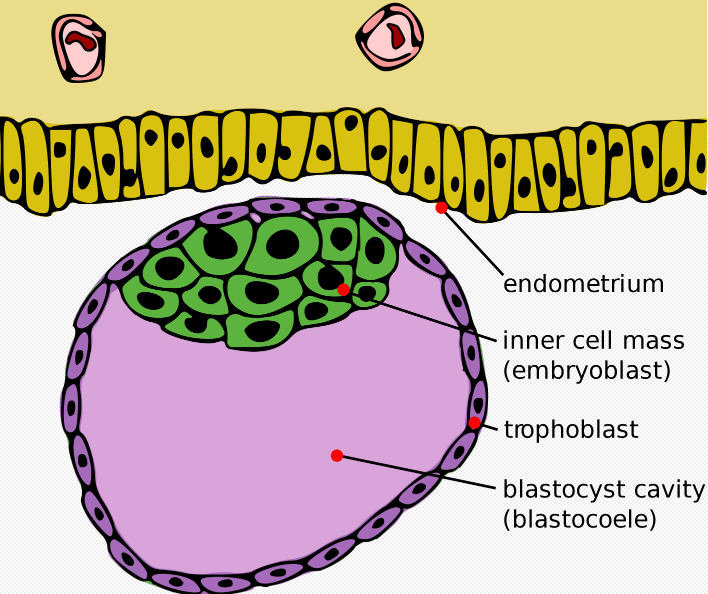
The embryonic development continues after the first 10 days of the germinal stage (ie zygote and blastocyst stages). This happens within the first 8 weeks since fertilisation (or 10 weeks after gestation). The embryo should now be embedded in the endometrium in a process called implantation. Cell division continues and we get significant cell differentiation (the emergence of different type of cells that result in blood cells, nerve cells, etc). Note that the embryo is literally in embryonic stage. That is, it does not have any functional organs though it starts to show some human features. A “proto”-heart (called a tubular heart) starts to pulsate at around 22 days (see https://www.ncbi.nlm.nih.gov/pmc/articles/PMC1767109/). It is still some way before it is fully formed. The nervous system starts to develop late in the 4th week but no brain yet.
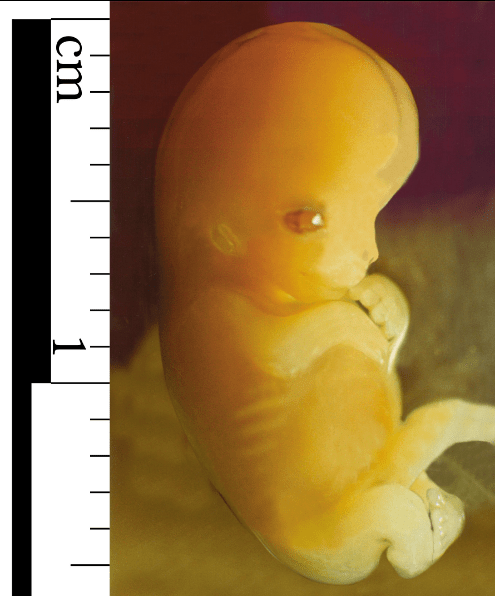
At around 9 weeks the foetus (or fetus) develops from an embryo. At the start of the this stage, the foetus is typically about 3 cm long. The placenta is fully functional now. The heart, hands, feet, brain and other organs are present, but are only at the beginning of development and have minimal operation. For example, brain activity is not present until around the 26th week.
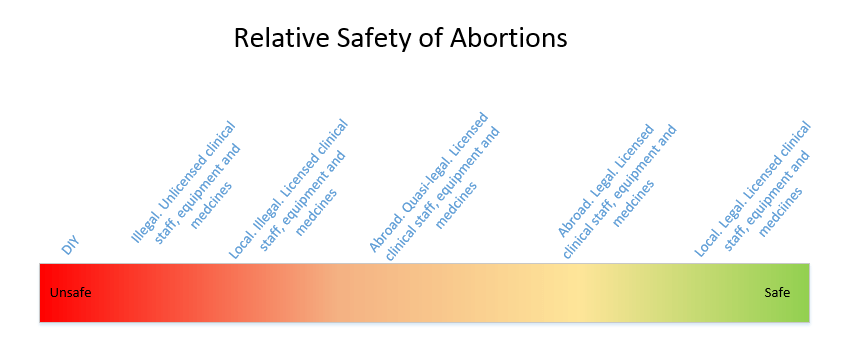
From the diagram above, Gibraltarians who seek abortions are mostly in the second category (from right to left) on the spectrum. They have access to relatively safe abortions, but to get these they need to travel to another country. The recent lockdown and other restrictions has somewhat changed this: they have had to either go abroad and possibly risk getting caught contravening the restrictions, or; they have had to go down the DIY route, the most dangerous route. This is dangerous because no abortion is risk-free (although the first category on the right in the diagram above has a mortality risk of 0.7%, a very low mortality rate, which is 14 times safer than carrying to term). Any complications would not be caught by a medical practitioner. There are various forms a DIY abortion could take: coat-hangers, crochet hooks, consumption of an excess of alcohol, punches to the stomach or other physical self-harm, obtaining pills from possibly unlicensed provider. All of those are potentially lethal. Even having access to abortions abroad poses a slightly higher risk than having the procedure done locally and legally. You can’t buy the Misoprostol and Mifepristone abortive pills nor have them at a clinic as these strictly provide only surgical abortions for non-residents.
 Pro-Choice Gibraltar